

A gaming bed is probably your kid's ultimate bedroom request, or you might just want to surprise and spoil them with something super cool.
It's best to introduce a gaming bed around age eight because these beds are basically ‘high-sleepers'—bunk beds with no bottom bunk.
Happy days if your child is over eight, but if they have over a year to go before they are eight, holding off is best to prevent nasty accidents.
Join us below for more insight and tips on choosing a gaming bed.
Below age eight
Genuinely, don't do it. Your kid might beg and plead (and probably show you TikToks of other kids with gaming beds), but there's a real risk of tumbles while asleep, and those gaming areas underneath need proper climbing skills to be accessed safely.
The last thing you want is a thump in the night or your kid falling off the ladder and giving their head a whack.
Eight to eleven
This is the sweet spot for gaming beds because your kids will have the coordination to handle the ladder, the sense to not dive-bomb off the top, and the maturity to keep their gaming zone tidy(ish).
Twelve to fourteen
While suitable for kids this age, you're getting into tricky territory here.
Your young teenager will love the gaming setup, but growth spurts might cramp that high bed. Plus, your child might want a more grown-up small double or double bed – and you'll only waste money buying two beds within a few years.
Room size matters
Gaming beds are bulkier than you think, so you must measure up correctly (including ceiling height) before splashing the cash.
For instance, bunk beds have protruding frames, which are always slightly longer and wider than the mattress (a standard single is 90 x 190 cm).
The bed and gaming area should be prioritised, with enough room to move around. Nobody wants a bedroom that feels like a sardine tin. If your kid's bedroom has a low ceiling, consider a mid-sleeper like the Ersa Midsleeper instead.
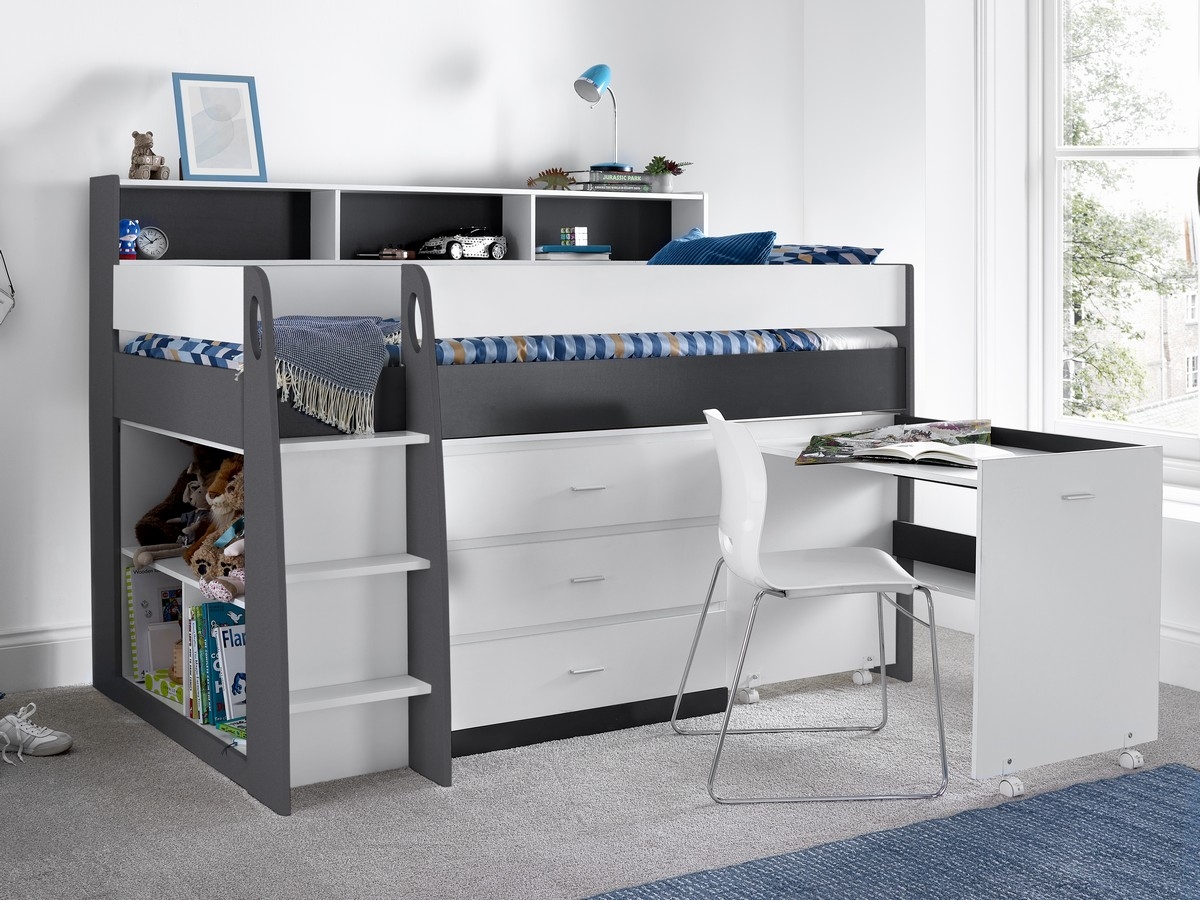 Gaming setup considerations
Think about what your kid is playing on. Console gamers need TV mounting points and cable management, while PC gamers need proper desk space. And don't forget storage — those games and controllers need a home other than the floor.
Safety features
Proper barriers are non-negotiable. Look for high rails to keep sleep-rolling teens and kids safely in bed. And those ladders? They need to be rock-solid, not wobbly afterthoughts (the allure of a metal gaming bed is strong here).
Future-proofing
Your kid's bed frame tastes will change faster than you can say "Fortnite." Look for beds where the gaming elements can be tweaked or removed. That way, you're not stuck with a giant money pit when they decide gaming is "so last year."
For instance, some gaming beds transform into a standard single bed, letting your kid have a regular bed when they get older.
When to ditch a gaming bed
Most teenagers grow out of a gaming bed – or any high-sleeper – around age 16 because, at that point, they'll have girlfriends, boyfriends, and whoever else over, and a standard bed is a much more grown-up and comfortable option.
The good news is that you could always move the gaming bed into your younger kid's room (if applicable) or sell it — they hold their value exceptionally well and are easy to take apart for delivery (put all the bolts in a zip-lock bag for safe keeping).
Summing up
Gaming beds are safe for children from age eight and stay valuable and relevant until around age sixteen, giving you eight years of use. Buy the sturdiest model you can find and get a popular colour to ensure it's loved for as long as possible.


